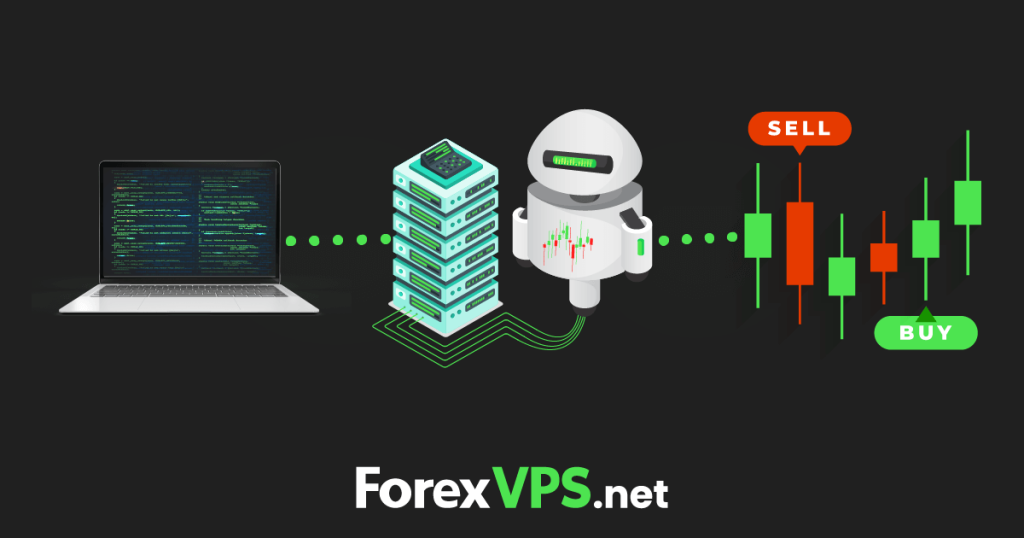
- Expert Advisor (EA) trading is the use of automated software programs that analyze financial markets and execute trades based on predefined algorithms and strategies, helping traders improve consistency, reduce emotional bias, and enable 24/7 market participation.
- Expert Advisors (EAs) require regular monitoring and maintenance to ensure they continue to perform as expected. Market conditions can change rapidly, and without proper oversight, an EA might make suboptimal trading decisions, leading to potential losses.
- Using a Virtual Private Server (VPS) is crucial for running EAs effectively. A VPS provides a stable, low-latency environment that keeps your EA running 24/7 without interruptions caused by power outages or internet disconnections, which is essential for timely trade execution and minimizing slippage.
What Is Expert Advisor (EA) Trading?
Expert Advisor (EA) trading refers to the use of Expert Advisors to automate trade decisions and execution processes. Expert Advisors are programmed scripts running on the MT4 or MT5 that help with trading activities, from automatically calculating lot sizes to executing trades. While traders primarily use EAs to trade forex currency pairs, they can be employed to trade any financial instrument, including stocks, indices, commodities, and cryptocurrencies.
EA trading is also referred to as algorithmic trading.
Expert Advisors, also known as forex robots, are developed using specified programming languages such as MQL4 and MQL5 for the MetaTrader trading platforms. These robots make decisions (generate trading signals) based on the results of their market analysis and the techniques they have been taught to use.
This includes technical indications, price patterns, and risk management parameters. Once an EA is engaged, it automatically watches the market, looks for trading opportunities, and places trades without any intervention from a trader.
Using forex trading robots has several benefits, including the possibility for quick and efficient trade execution and the elimination of emotional and psychological biases that help traders make consistent profits. EAs can function around the clock, especially when hosted on forex VPSs, allowing traders to take advantage of market fluctuations outside traditional trading hours.
PS: MQL4 and MQL5 are high-level languages designed specifically for developing trading robots, technical indicators, and automated financial trading utilities for the MetaTrader trading platforms.
How Do You Trade with an Expert Advisor?
Here’s a step by step-by-step guide on how to trade with an Expert Advisor:
Step 1: Choose a Reliable Broker
Selecting a broker is the first step towards EA trading. Essentially, having retail investor accounts with a broker is among the prerequisites of forex trading. While the market is full of legit and scam brokers, selecting a reputable and reliable broker is essential. Usually, regulated brokers are considered safer compared to non-regulated ones.
You can also check a broker’s rating with third-party reviewing websites like Trustpilot, BrokersView, etc. Reading clients’ feedback on social platforms, i.e., Reddit and Quora, may also help you assess whether or not the broker is worth signing up for trading CFDs and other tradable assets.
Also, ensure your selected broker offers compatible trading platforms widely used for EA trading, such as MetaTrader 4 (MT4) or MetaTrader 5 (MT5).
It is also important that your forex broker has low trading latency. Otherwise, you might find that your trades are getting executed at prices that differ from your intended prices.
Step 2: Develop a Trading Plan or a Trading Strategy
Before utilizing an EA, having a well-defined trading plan or strategy is crucial. Determine your trading goals, risk tolerance, and preferred trading approach. This includes selecting technical indicators, defining entry and exit criteria, and establishing risk management rules. A clear strategy will guide the development and configuration of your trading robot.
Here’s a list of the best algorithmic trading strategies you might find useful.
Step 3: Choose and Install an Expert Advisor
Select an EA that aligns with your trading strategy. You can either develop your own EA using programming languages like MQL4 or MQL5, or choose from a wide range of pre-built paid expert advisors available in the market. Once you have an EA, install it on your MT4/MT5 following the instructions, or seek advice from EA providers if necessary.

Be careful. Downloading EAs from unverified sources is one of the most common malware vectors targeting trading VPS environments.
Step 4: Test the Expert Advisor
Before deploying your EA in live trading conditions, it is crucial to test it thoroughly using historical data. This process, known as backtesting, helps evaluate the EA’s performance under various market conditions. You can use reliable backtesting tools available within the Metatrader market to simulate trades and analyze the results. If necessary, adjust the EA’s settings or modify the strategy to improve its performance. Do not hesitate to repeatedly use the EA with a demo account to remove bugs and errors.

Step 5: Monitor the Expert Advisor
After configuring your EA, you need to monitor its performance regularly. Review its profitability and risk measures and monitor its trading activities to verify that it is following the specified plan. Based on the outcomes, you may need to change some parameters to optimize it.

Step 6: Manage Risk
When using an EA in trading, employ sound risk management strategies. Decide where to place stop-loss and take-profit orders to reduce risk and preserve gains. Depending on the size of your trading account and your comfort level with risk, you should alter the amount you risk with each transaction. Examine your trading goals and risk management settings frequently to ensure they are in sync with market trends.
Step 7: Continuous Learning
Using an EA for trading demands constant study and adjustment. Keep abreast of any developments in the market or trading circumstances that might affect the efficacy of your EA and act accordingly. Learn as much as possible about various trading patterns, indicators, and tactics to deepen your market expertise. Keep your trading plan and EA under constant scrutiny and improve it as market conditions change.
Why Do You Need a Virtual Private Server (VPS) for Trading with EAs?
A Virtual Private Server (VPS) offers several key advantages for trading with Expert Advisors (EAs). It:
- Allows manageability from any location via remote desktop connections and other remote access protocols, making it easy to change your EA’s parameters, review trading activity, and perform routine system maintenance remotely.
- Provides consistent and hassle-free trading by running in a secure data center with uninterrupted internet and power supply, enabling your Expert Advisor to run around the clock without interruption.
- Facilitates trade execution with minimal latency, which is crucial for High-Frequency Trading (HFT), significantly improving the speed and precision of your EA’s trade executions.
While VPS ensures uninterrupted trading operations, improves trade execution speed, and enhances the flexibility of your trading activities, not all VPS are worth your investment. Although multiple VPS providers exist, Forexvps.net is one of the best VPS providers available.
Is It Possible to Use More Than One Forex EA in Trading at Once?
Using multiple Forex Expert Advisors (EAs) simultaneously in trading is possible. Running multiple trading robots allows for the diversification of trading strategies, capturing a wider range of market opportunities and reducing reliance on a single trading approach. It can help distribute risk and enhance risk management by mitigating the impact of underperforming EAs.

However, it is important to manage the interaction between multiple EAs carefully, considering factors like trading styles, timeframes, and risk parameters. Proper configuration, position sizing, and ongoing performance monitoring are essential to ensure the coordinated operation and optimal results of the portfolio of EAs.
Conclusion
While Expert Advisors offer the allure of automated trading and potential benefits, remember that they are not a guaranteed way to profit from the market. Therefore, it is important to do your research, backtest your EA rigorously, and optimize it thoroughly before applying it to your live trading account.
Frequently Asked Questions About Expert Advisor Trading
Here are answers to some of the most common questions about Expert Advisors (EAs) and automated trading to help you get started and trade more effectively.
What is an Expert Advisor (EA) in trading?
An Expert Advisor (EA) is an automated trading program designed to run on MetaTrader platforms like MT4 and MT5. It analyzes market data based on predefined algorithms and executes trades automatically without manual intervention.
How do I install an Expert Advisor on MetaTrader?
To install an EA, copy the EA file into the ‘Experts’ folder of your MetaTrader installation directory. Then, restart MetaTrader, find the EA in the Navigator panel under Expert Advisors, and drag it onto the chart you want to trade.
Can I use multiple Expert Advisors simultaneously?
Yes, you can run multiple EAs on different charts or even on the same chart with unique identifiers (“magic numbers”) to diversify your trading strategies and manage risk better.
How do I test if an EA is profitable before using it live?
You should backtest your EA using historical market data in MetaTrader’s strategy tester and perform forward testing on a demo account to validate its performance under current market conditions before trading with real money.
Why should I use a Virtual Private Server (VPS) for EA trading?
A VPS allows your EA to run 24/7 with minimal latency and uninterrupted internet connectivity, ensuring your automated trades execute promptly even when your computer is off or disconnected.
Are Expert Advisors suitable for beginner traders?
While EAs can simplify trading by automating decisions, beginners should learn the basics of trading and risk management first. Proper testing and monitoring are essential to avoid unexpected losses when using EAs.
What risks are associated with using Expert Advisors?
EAs can experience technical problems, fail to adapt to sudden market changes, or produce losses if not properly tested and monitored. Peer-reviewed research on systemic failures in algorithmic trading confirms that technical malfunctions and failure to account for abnormal market conditions are among the key risk categories that cause automated systems to produce unexpected losses. It’s important to manage risk carefully and not rely solely on automation.
Can I create my own Expert Advisor without coding skills?
Yes, there are EA builders and software tools that allow you to create EAs using visual interfaces and templates without needing to write code, making it accessible for traders without programming experience. One of such tools is AlgoBuilder, an AI tool that allows you to develop an Expert Advisor from simple prompts.